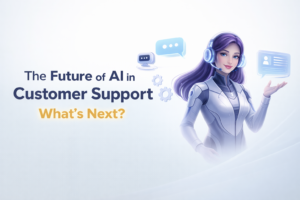
As businesses evolve, customer expectations are shifting towards faster, more personalized service. AI technologies are stepping up to meet these demands, revolutionizing the way companies approach customer support. In this article, we explore the future of AI in customer support, identifying upcoming trends and offering actionable insights for businesses looking to stay ahead of the curve.
AI in Customer Support Today: A Snapshot
AI’s impact on customer support has already been felt, with businesses utilizing chatbots, virtual assistants, and automated systems to streamline processes. These solutions help businesses reduce wait times, automate repetitive tasks, and offer 24/7 support.
Key Trends:
AI Chatbots: Already handling basic queries and transactions.
Self-Service Solutions: Empowering customers to solve problems independently.
Data-Driven Insights: AI systems analyzing customer data to personalize interactions.
What’s Next: The Future of AI in Customer Support
The next five years promise even more innovation in AI-driven customer support. Here are some exciting trends to watch:
Predictive AI: Anticipating Customer Needs
- Predictive AI will take customer service to new heights, allowing businesses to anticipate customer issues before they arise.
- By analyzing previous interactions, AI can predict when a customer might need assistance and offer proactive solutions.
Voice Assistants & Conversational AI
- Voice-based customer support, powered by conversational AI, will become more prevalent.
- Enhanced with natural language processing (NLP), these assistants will handle more complex queries, providing customers with a more human-like experience.
AI-Powered Personalization
- In the future, AI will create even more personalized customer experiences. By analyzing user behavior and preferences, AI can tailor recommendations, offers, and solutions, improving customer satisfaction and loyalty.
Integration with Augmented Reality (AR)
- As AR technology evolves, AI can integrate with AR platforms to offer interactive customer support, where users get visual aids, tutorials, or step-by-step assistance in real-time.
Emotional AI: Understanding Customer Sentiment
- Emotional AI will help understand customer emotions, enabling businesses to tailor responses accordingly. This trend will be particularly useful in industries like healthcare, where empathy is crucial.
Book a Demo
- Your personal details are safe with us.
AI Customer Service Automation: Streamlining Operations
AI’s role in automating customer service operations will continue to grow, allowing businesses to reduce costs and improve efficiency.
Benefits:
- Faster Response Times: AI systems can respond instantly to common customer queries.
- Increased Capacity: AI can handle multiple customer inquiries simultaneously
- Cost-Effective: Automation reduces the need for a large support team, freeing up resources for other areas.
Adopting AI in Your Customer Support Strategy
Businesses looking to stay competitive need to adopt AI technologies strategically. Here’s how to begin:
- Start Small: Implement AI in one area, such as handling FAQs or offering 24/7 support via a chatbot.
- Focus on Customer Experience: Use AI to enhance, not replace, human interactions. AI should empower your support team, not take over completely.
- Ensure Seamless Integration: Make sure AI tools integrate smoothly with your existing CRM and support platforms.
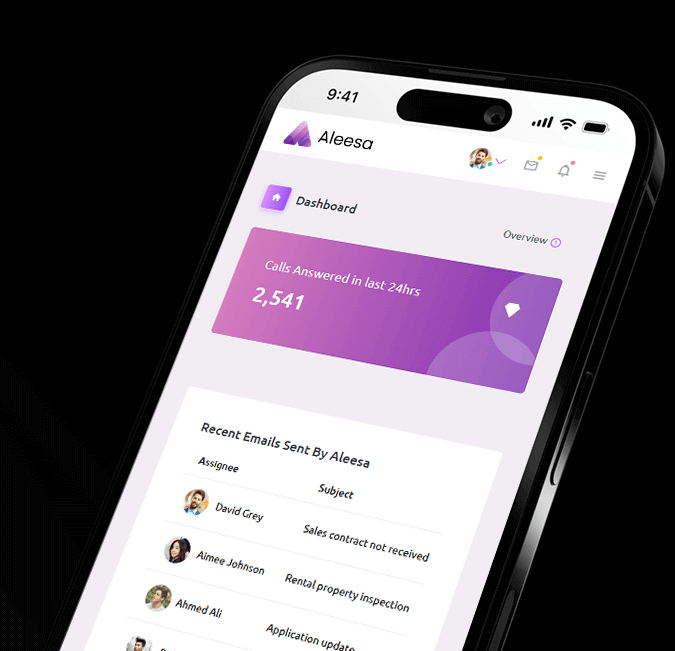
Hear how Aleesa handles live calls in action
Experience Aleesa’s real-time conversations as she manages customer inquiries with accuracy, speed, and a natural human touch.

Challenges and Considerations for AI Adoption
While AI offers numerous advantages, businesses must be mindful of certain challenges:
- Data Privacy and Security: Protect customer data as AI systems will rely heavily on personal information to function effectively.
- Customer Trust: Maintain transparency with customers about when they’re interacting with AI versus human agents.
- Technical Challenges: Ensure that AI systems are properly integrated into your infrastructure and that staff are trained to use them.
Conclusion
The future of AI in customer support is bright, with advancements in predictive AI, conversational interfaces, and personalization set to revolutionize the industry. As these technologies evolve, businesses that proactively adopt AI-driven solutions will have a competitive advantage. To remain ahead, focus on creating a balance between automation and human interaction, ensuring an exceptional customer experience.